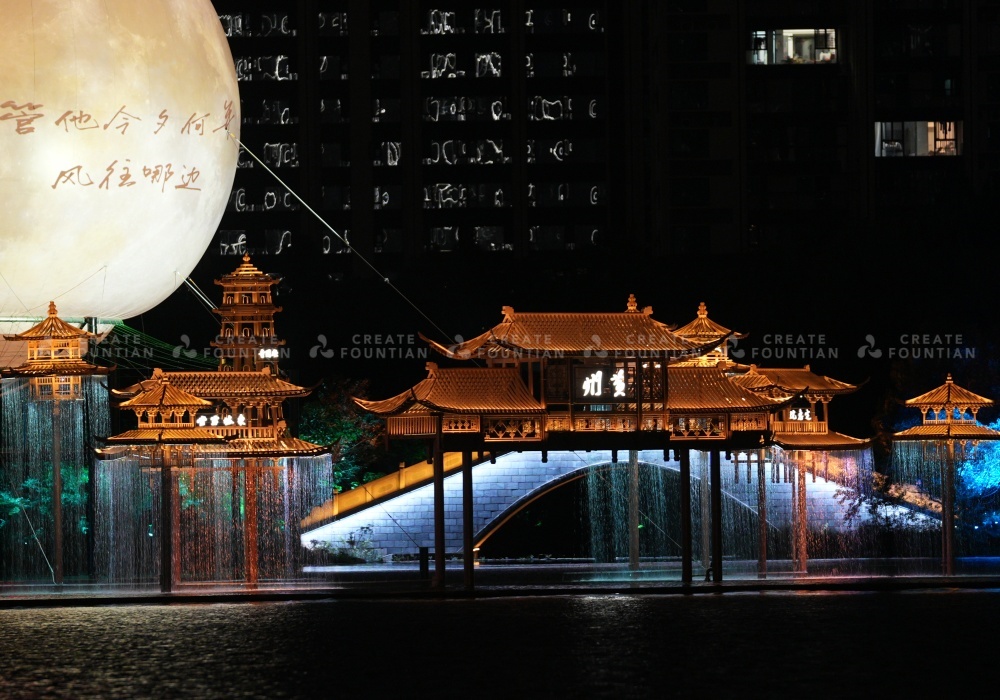
A floating fountain is a type of decorative or functional water feature designed to float directly on the surface of a body of water, such as a pond, lake, reservoir, or large decorative pool.
Key Components & How It Works:
1. Floating Platform:
Typically made of durable, buoyant materials like polyethylene foam, sealed pontoons, or plastic. It keeps the fountain stable and afloat.
2. Pump and Nozzle System:
A submersible pump (usually housed within the float) draws water from just below the surface and pushes it through a fountain nozzle, creating various spray patterns (e.g., vertical jet, bell, tiered, or aerating patterns).
3. Power Supply:
Most are powered by electricity via a waterproof cable connected to a shore-based power source. Solar-powered versions also exist.
4. Anchor System:
To prevent drifting, floating fountains are often anchored to the bottom or tied to the shore with cables, allowing some movement but keeping them in a general area.
Main Purposes & Benefits:
1. Aesthetics:
Enhances the visual appeal of a water body with dynamic water displays, often illuminated with LED lights for night-time effects.
2. Aeration:
One of the most important functional roles. By spraying water into the air, oxygen is transferred into the water as droplets fall back to the surface. This helps:
* Improve water quality
* Reduce algae growth
* Support fish and aquatic life
* Prevent stagnation and odor
3. Circulation:
Helps break up thermal layers in the water, promoting uniform temperature and reducing mosquito breeding.
4. Decorative Water Management:
Used in urban ponds, golf course water hazards, hotels, parks, and residential lakes.
Common Types of Floating Fountains:
* Decorative Display Fountains: Focus on tall, elegant spray patterns.
* Aerating Fountains: Prioritize water circulation and oxygen transfer, often with smaller, broader spray patterns.
* Solar Floating Fountains: Environmentally friendly, using solar panels to power the pump.
* Lighted Fountains: Include submersible LED lights that can change colors.
Considerations:
* Size and Scale: Ranging from small backyard pond models to large industrial ones for reservoirs.
* Installation: Generally easier to install than fixed fountains since no underwater construction is needed.
* Maintenance: Requires periodic cleaning of pump intake and nozzle, and securing against weather or vandalism.
In short, a floating fountain combines beauty with function, serving as both an eye-catching display and a practical tool for improving water health.
You may like: Pool Water Fountain,Digital Water Curtain Fountain,Water Screen Film Show