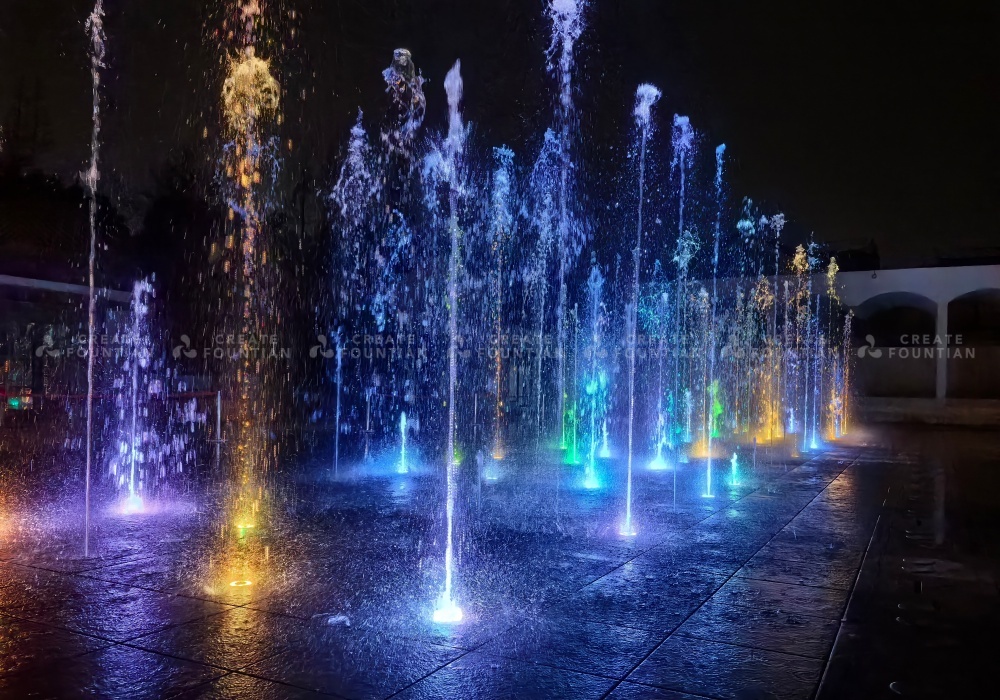
A dry floor fountain, also known as an interactive fountain, splash pad fountain, or water feature, is a type of fountain where the water jets, sprays, or streams are flush with a paved surface, and the water drains away immediately—leaving the surface dry when the fountain is not in operation.
The key illusion is that there is no visible pool or basin of water, creating a seamless, interactive public space.
How It Works (The "Dry" Illusion):
1. Flush Grates/Nozzles: Water jets are embedded in a flat, level surface (like concrete, stone, or grating).
2. Hidden Drainage System: Beneath the surface is a large, shallow catch basin or reservoir. The water drains through discreet slots or perforations in the paving.
3. Recirculation: A powerful pump system collects the drained water, filters and treats it, and then recirculates it back through the jets.
4. Timed Cycles: Often controlled by timers or sensors, the fountain can turn on and off in patterns, allowing people to enter the "dry" zone when it's off.
Main Purposes & Features:
1. Interactive Play & Social Space:
The primary purpose is to invite people—especially children—to play, run, and cool off in the water. It turns a public plaza into a dynamic recreational area.
2. Architectural Aesthetics:
When off, it functions as a sleek, unobtrusive plaza or courtyard. When on, it creates a dramatic and often choreographed water display.
3. Safety:
Because there's no standing water (except a shallow film during operation), it’s considered safer than traditional pools, with lower drowning risks. Surfaces are often non-slip.
4. Seasonal Flexibility:
In colder climates, when the water is turned off for winter, the space can still be used as a normal pedestrian plaza.
Common Examples & Where You See Them:
* Public Plazas & Town Squares: E.g., Crown Fountain in Chicago's Millennium Park (though it has reflecting pools, the interactive area functions similarly).
* Shopping Centers & Urban Developments: Used to attract visitors and create a lively atmosphere.
* Museums, Civic Centers, and Parks: As a central, engaging feature.
* Children’s Play Areas/Splash Pads: A safer, zero-depth water play alternative to pools.
Key Considerations:
* High Use & Maintenance: Requires robust filtration and water treatment systems (often chlorinated) due to direct public contact. Regular cleaning is essential.
* Water Conservation: Recirculates water, so it’s relatively efficient despite its size.
* Cost: Installation is complex and expensive due to the extensive underground plumbing, reservoir, and pumping systems required.
* Accessibility: When dry, the surface is fully accessible. Care must be taken to ensure safe, inclusive design when water is on.
Contrast with Traditional and Floating Fountains:
* Traditional Fountain: Has a visible, permanent pool or basin of water. You look at it from the edge.
* Floating Fountain: Sits on a body of water; its purpose is aeration and decoration on the water.
* Dry Fountain: The water is temporary and interactive; the space itself transforms. You walk into it.
In short, a dry fountain is a clever piece of engineering and landscape architecture that creates a magical, transformable space—dry and functional one moment, and a thrilling water playground the next.
You may like: Pool Water Fountain,Digital Water Curtain Fountain,Outdoor Fountain